"Mosaic should be included in the curriculum of every school!"
— Luis Suarez, Teacher
Our Curriculum
All of our programs emphasize building self-esteem and community and empower students to create a peaceful future. In particular, we focus on four themes:
- The celebration of diversity and awareness of stereotyping, prejudice, and discrimination
- Respect for and appreciation of self and others
- Teamwork and cooperation
- Communication and nonviolent conflict resolution (including listening skills, expressing feelings productively, assertiveness, and empathy)
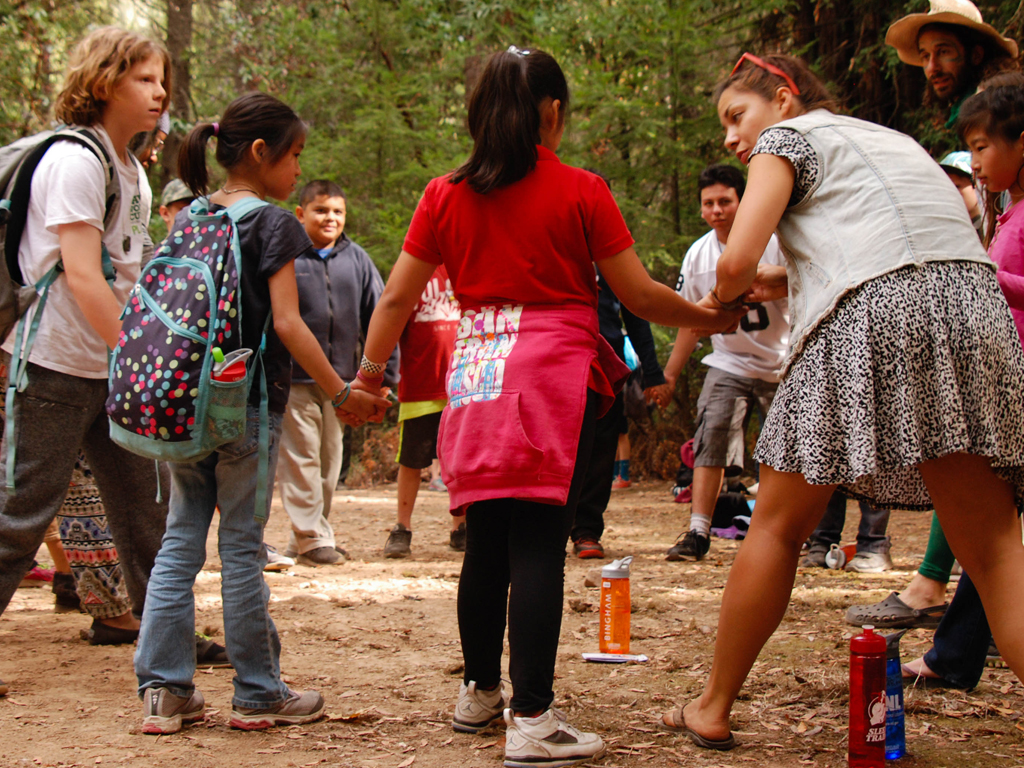
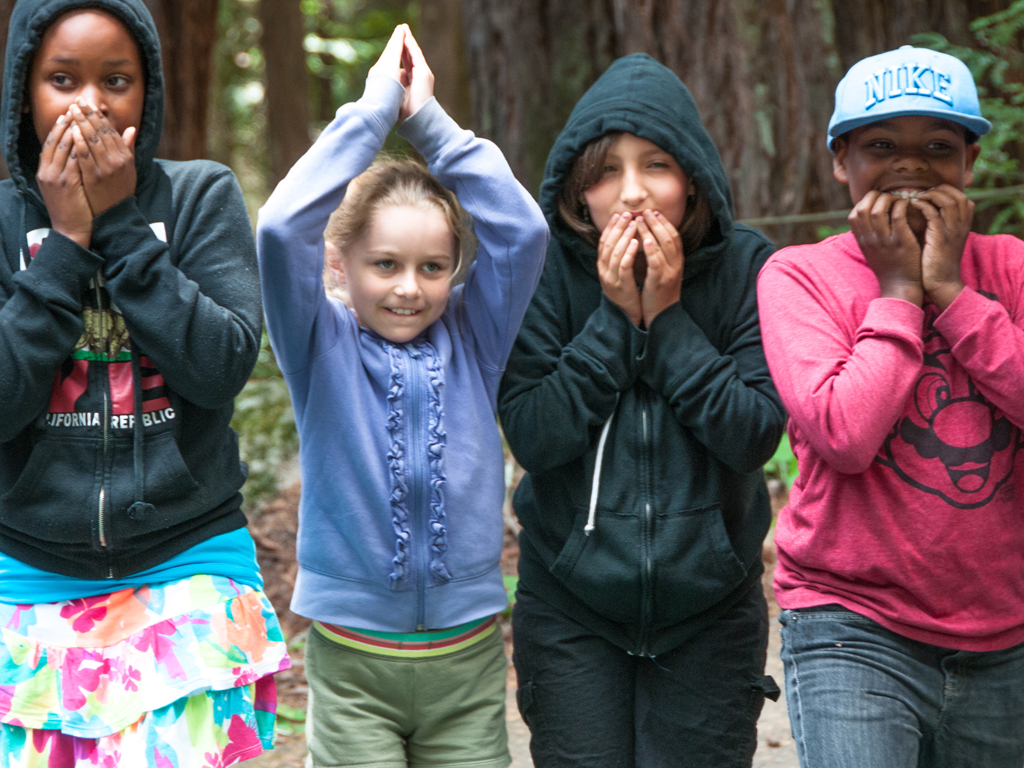
Our innovative curriculum is experiential. Learning at Mosaic becomes a magical adventure as the curriculum comes to life through hands-on activities, interactive theater, games, role-plays, discussions, stories, and original songs.
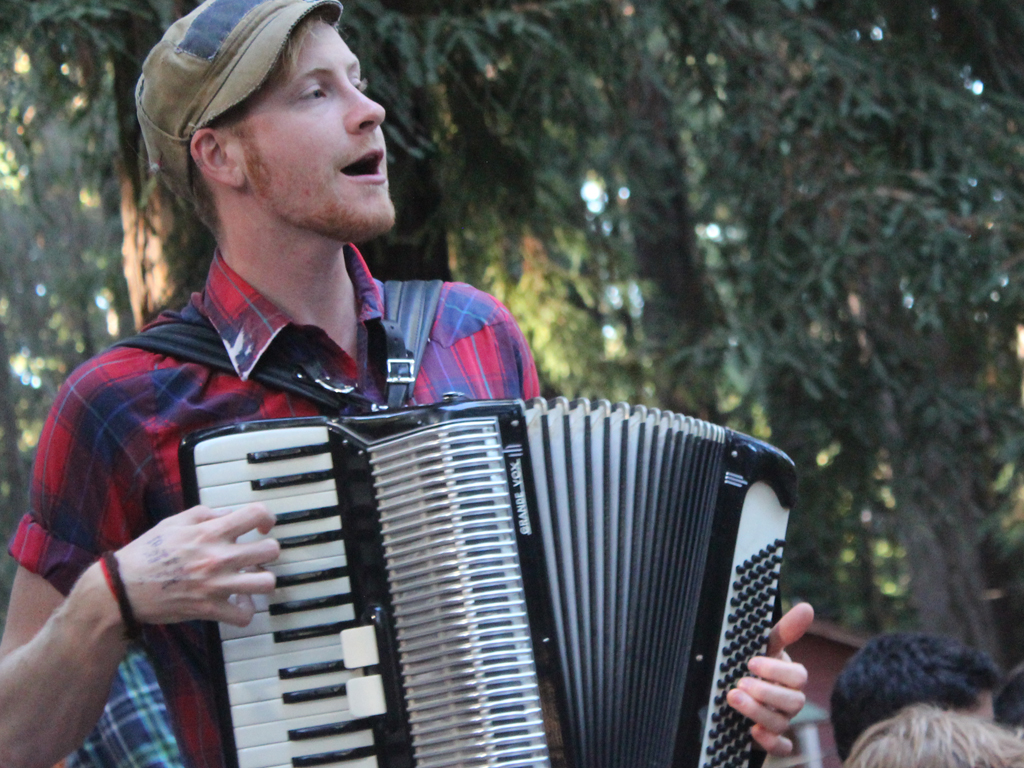
Our musical curriculum has received rave reviews and is available on CD.
Get more details about our curriculum.
Read a summary of our program evaluation.
Musical Curriculum and Song Book
Music is an integral facet of Mosaic’s success. Extensive research shows that music facilitates learning and recall of information. With the Mosaic songs, children learn lessons in a fun and engaging manner that is reinforced every time they sing, whether it be in the classroom, on their way home from school, or after they brush their teeth. One of our songs (“Fighting is Not the Solution”) actually offers students the opportunity to practice their conflict resolution skills through making I-statements in rhythm to the beat.
Currently, our music is widely available on CD. We are often asked by teachers for more support in using the songs in their classrooms. Therefore, we have drafted an accompanying curriculum guide which will soon be available to our partner schools and other educational organizations. The guide includes piano music, guitar chords and lyrics to all of the songs on our CD. It features photos and illustrations of students and two experiential activities per song, one of which is geared towards students in kindergarten through 3rd grade and the other for children in 4th through 6th grade. In addition to supporting our Mosaic teachers, this curriculum guide, sold as a companion to our CD, allows teachers across California and the US to take advantage of our revolutionary work and creatively infuse Mosaic values and conflict resolution skills into their classrooms.
Standards and our Curriculum
The Mid-continent Research for Education & Learning (McREL) has performed among the most comprehensive analyses of different state standards in the area of Life Skills and generated a well-reputed hybrid model that integrates standards and benchmarks for grades K-12. Those that relate to The Mosaic Project’s curriculum are referenced below. We offer this standards review to situate our curriculum in the larger professional arena of multicultural, character, and life skills education, and to support educators in understanding how The Mosaic Project’s curriculum can support a wide array of learning objectives.
Life Skills & Self-Regulation
Standard 2: Performs self-appraisalStandard 3: Considers risks
Standard 4: Demonstrates perseverance
Standard 5: Maintains a healthy self-concept
Standard 6: Restrains impulsivity
Life Skills & Working with Others
Standard 1: Contributes to the overall effort of a groupStandard 2: Uses conflict-resolution techniques
Standard 3: Works well with diverse individuals and in diverse situations
Standard 4: Displays effective interpersonal communication skills
Physical Education
Standard 5: Understands the social and personal responsibility associated with participation in physical activityBehavioral Studies
Standard 4: Understands conflict, cooperation, and interdependence among individuals, groups, and institutionsCivics
Standard 11: Understands the role of diversity in American life and the importance of shared values, political beliefs, and civic beliefs in an increasingly diverse American societyThinking & Reasoning
Standard 3: Effectively uses mental processes that are based on identifying similarities and differencesStandard 5: Applies basic troubleshooting and problem-solving techniques
Music
Standard 1: Sings, alone and with others, a varied repertoire of musicCalifornia Academic Standards and the In-School Project
The Mosaic In-School Project was created to complement our Outdoor School and work toward the promotion of peace, mutual understanding and conflict resolution. Through introducing Mosaic lessons and skills from the very beginning of elementary school, and cultivating them throughout the grade levels, this curriculum not only sets the stage for and reinforces the learning of the students who attend our outdoor school, but it infuses Mosaic values and skill-sets into school cultures at large and improves the overall climate of our partner schools.
The In-School curriculum integrates and fulfills many California teaching standards and is designed to be developmentally relevant and appropriate. Using fun and experiential activities and lessons, Mosaic lessons support students in becoming more socially and emotionally literate and adept, while deepening their appreciation for diversity and justice, and cultivating empathy, teamwork, conflict resolution skills. Teachers have consistently reported that their classrooms feel safer and more inclusive in the wake of Mosaic programs. Specifically, Mosaic lessons directly fulfill multiple California Health Education content standards in the following categories: Growth and Development; Mental and Emotional Health; Personal and Community Health; and Injury Prevention and Safety.
The standards that our curriculum directly integrates include:
- K: 1.3.G; 1.6.S; 1.7.S; 1.1.M; 1.4.M; 4.2.M; 8.1.M; 1.5.P
- 1st: 1.3.G; 1.6.S; 1.12.S; 5.2.S; 8.1.S; 1.7.P
- 2nd: 1.1.M; 1.2.M; 1.7.M; 1.8.M; 1.9.M; 1.10;M; 1.10.M; 1.11.M; 1.12.M; 2.1.M6.1.M; 7.1.M; 7.2.M; 8.1.M; 8.2.M
- 3rd: 4.2.G; 8.1.G; 1.1.M; 4.1.M; 8.1.M; 8.2.M; 8.3.M;
- 4th: 1.2.S; 1.3.S; 1.4.S; 1.18.S; 2.1.S; 2.3.S; 4.2.S; 4.5.S; 5.2.S; 5.3.S 7.1.S 8.2.S;
- 5th/ 6th: 1.6.P; 5.1.P; 1.1.S; 2.2.S; 7.1.S; 8.2.S; 1.4.M; 1.5.M; 1.8.M; 1.9.M; 4.2.M; 4.3.M; 4.4.M; 5.3.M; 7.3.M; 8.1.M; 8.2.M